
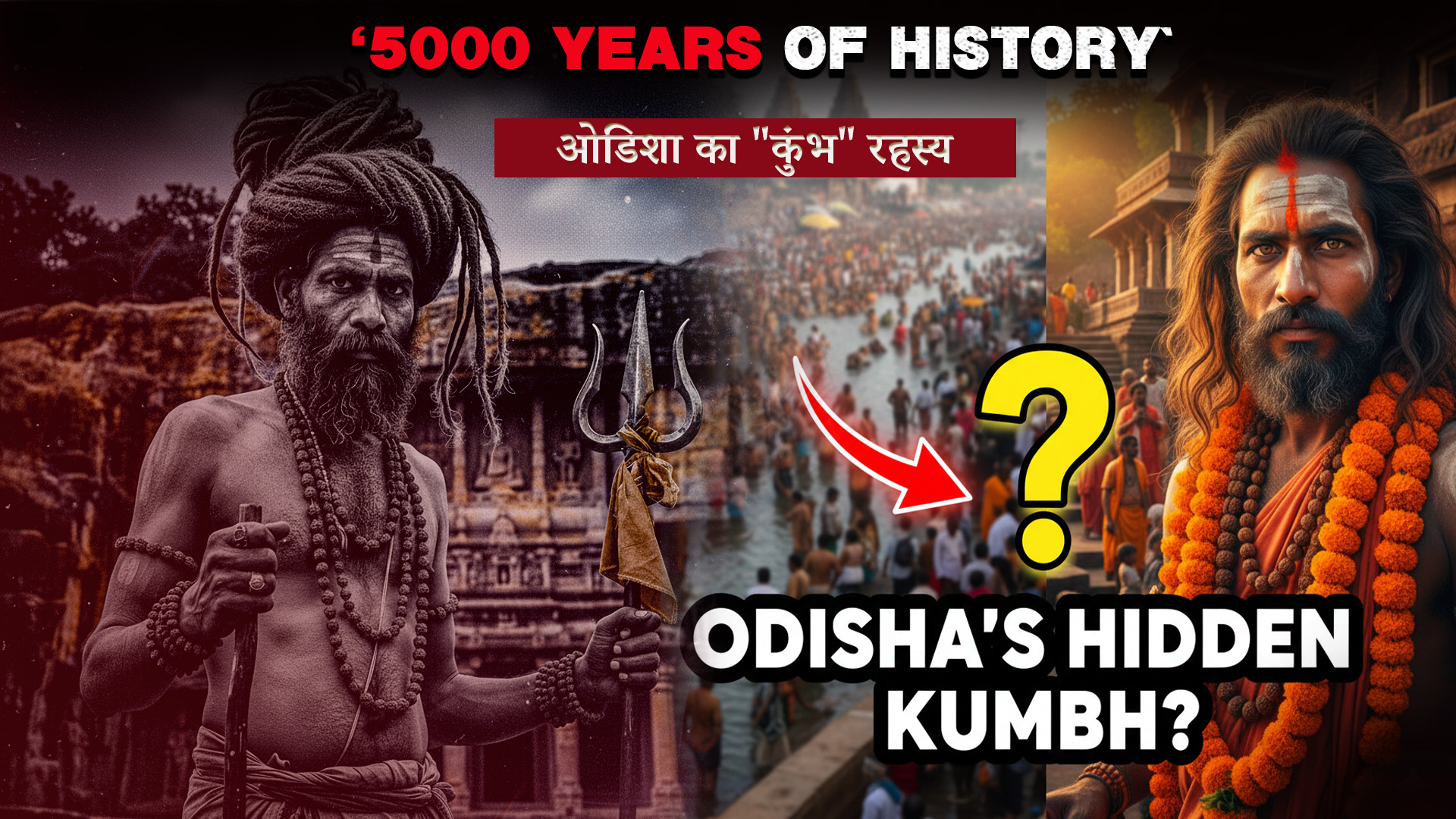
According to history, the foundation of this fair was laid by the Emperor of Kalinga, Mahameghabahana Kharavela, in the 1st century BC. The caves of Khandagiri and Udayagiri were originally built for Jain monks. On the auspicious day of Magha Saptami, saints and scholars from all over India would gather here to debate the scriptures, serving as an ancient precursor to the modern-day Kumbh Mela.
The Connection with Chandrabhaga Another significant aspect of this fair is the Chandrabhaga pilgrimage in Konark. It is believed that on this holy day dedicated to Sun worship, the saints first take a sacred dip in the Chandrabhaga river before journeying to Khandagiri. This religious path is considered one of the greatest routes of ‘Surya Upasana’ (Sun Worship).
The Tradition of the Eternal Fire (Akhanda Dhuni) The most captivating feature of the Khandagiri Mela is the Akhanda Dhuni. For hundreds of years, saints have gathered in their respective camps (khalas) to light sacred fires and perform Yajnas. This fire is not merely for warmth; it is worshipped as a symbol of divine knowledge and purity.
A Spiritual Gathering Much like the Prayag Kumbh Mela, this event witnesses a massive congregation of Naga Sadhus and various Akhadas (religious orders), proving the profound spiritual depth of Odisha’s traditions.
Conclusion The Kumbh Mela of Odisha is not just a commercial fair; it is a living history passing down from the glorious reign of Emperor Kharavela. It is a grand confluence of culture, faith, and humanity.